
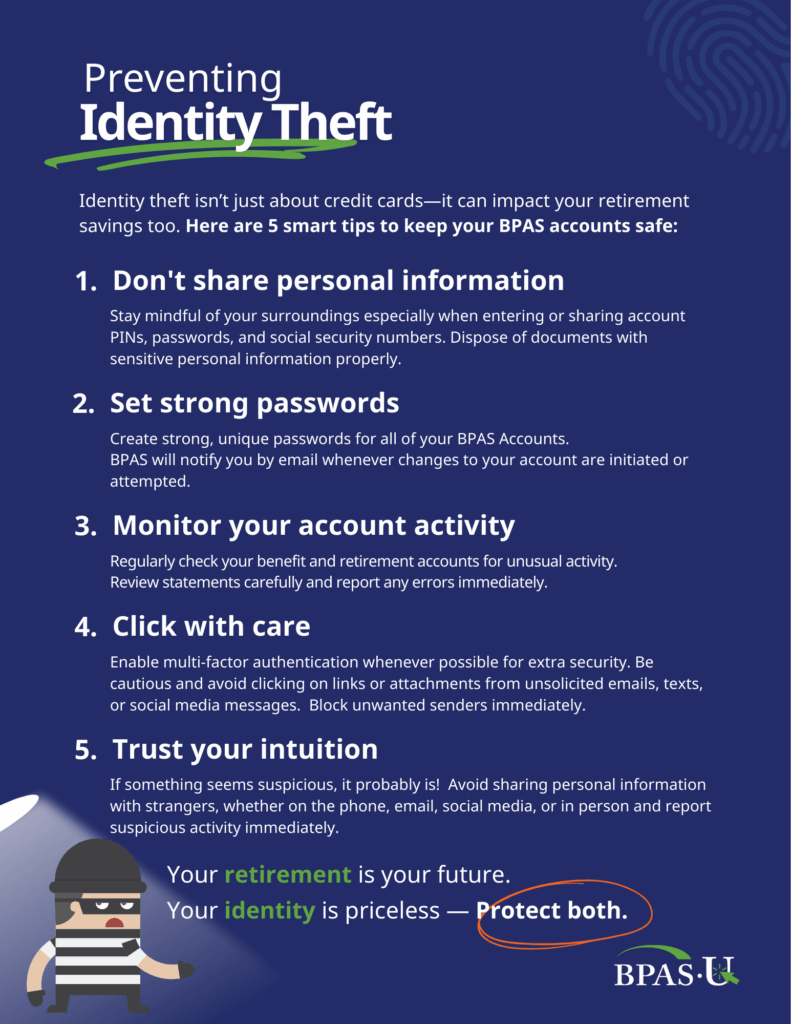
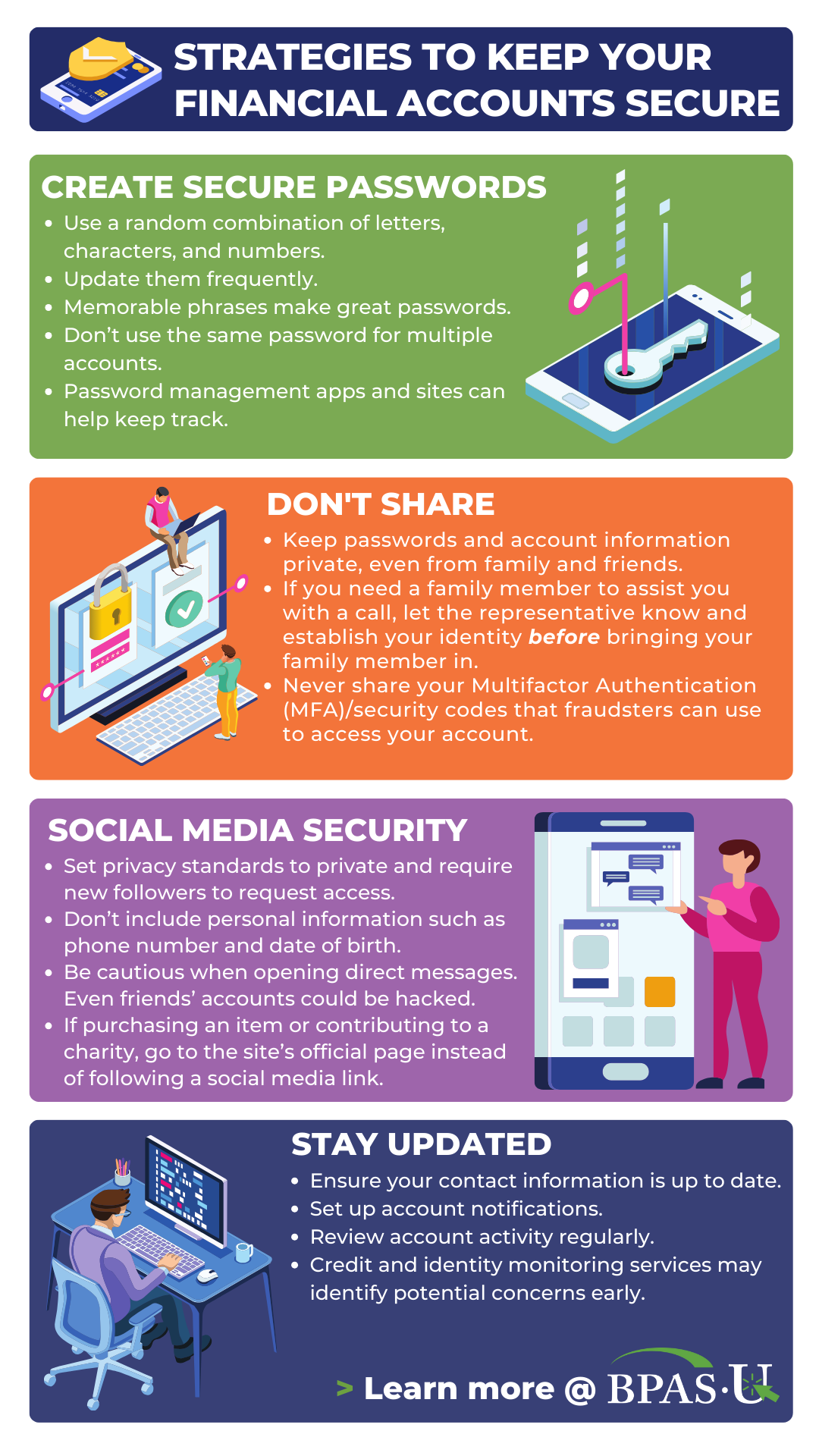
While even the most secure measures don’t guarantee a foolproof way to prevent fraud, being vigilant and aware of potential issues can help protect your identity and financial accounts. Many new threats revolve around fraudulent schemes to get your money and identity, often using unsolicited emails, phone calls, texts, and social media messages. And, with advances in AI and other technology, many of these scams can appear to originate from someone you know and trust. Before reacting to a request for information and/or money, pause to consider potential red flags. Here are some ways to protect yourself and prevent fraud:
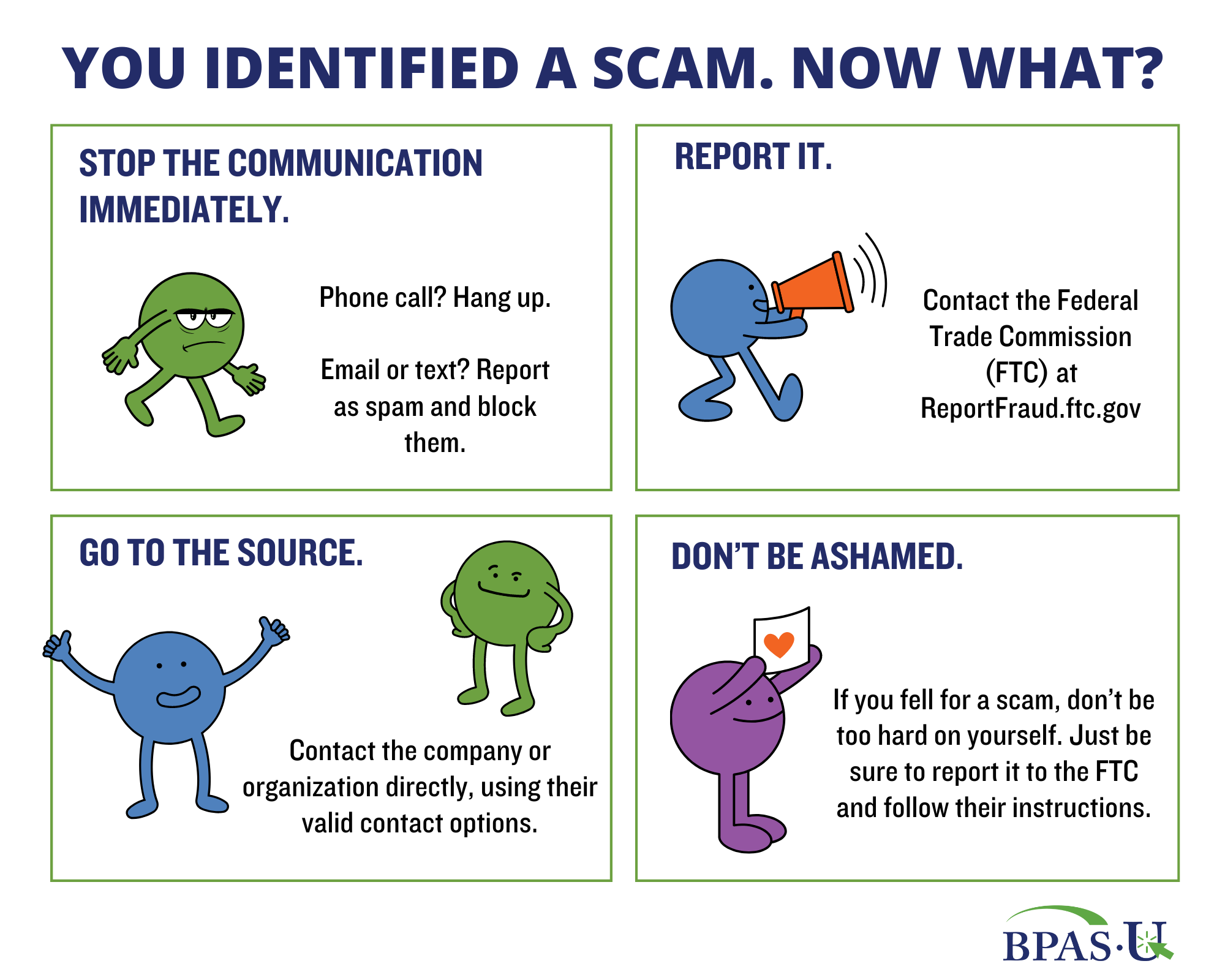
What should you do if you suspect a scam or experience fraud?
If you believe someone has attempted—or succeeded—in accessing your account, it’s important to act quickly. Here are a few key steps to take:
1. Report Suspicious Activity Immediately
Reach out to the company or financial institution where the suspicious activity occurred. If you feel your BPAS account has been compromised, contact BPAS Participant Services at 866‑401‑5272.
2. Change Your Passwords
Update passwords on affected accounts and turn on two‑factor authentication.
3. Place a Fraud Alert on Your Credit File
Contact any one of the three major credit bureaus to place a free fraud alert.
Equifax: 1‑888‑378‑4329
TransUnion: 1‑800‑916‑8800
Experian: 1‑888‑397‑3742
4. Report to the FTC
Submit a report to the Federal Trade Commission at ReportFraud.ftc.gov to document the incident and generate a personalized recovery plan.
5. Alert the IRS
Contact the IRS Identity Protection Specialized Unit at 1‑800‑908‑4490 if you believe your tax information may be compromised.
Additional Resources

How to create strong, secure passwords:
Click here for a blog post from our parent company, Community Bank.
How to spot an AI scam:
Click here for a blog post from our parent company, Community Bank.
Please note, you will be redirected to a different site